JNTU-GV CEV — Official Institutional Web Platform & Enterprise CMS
Institutional Case Study • Production Enterprise Portal • Multi-Role CMS & Dynamic Department Portals • Offline AI RAG Bot
JNTU-GV CEV Web Platform (jntugvcev.edu.in) is the official web ecosystem and multi-tenant Content Management System engineered for the Jawaharlal Nehru Technological University - Gurajada Vizianagaram (College of Engineering). Built from the ground up to replace outdated legacy infrastructure, it serves thousands of daily students, faculty members, researchers, and administrative officers.
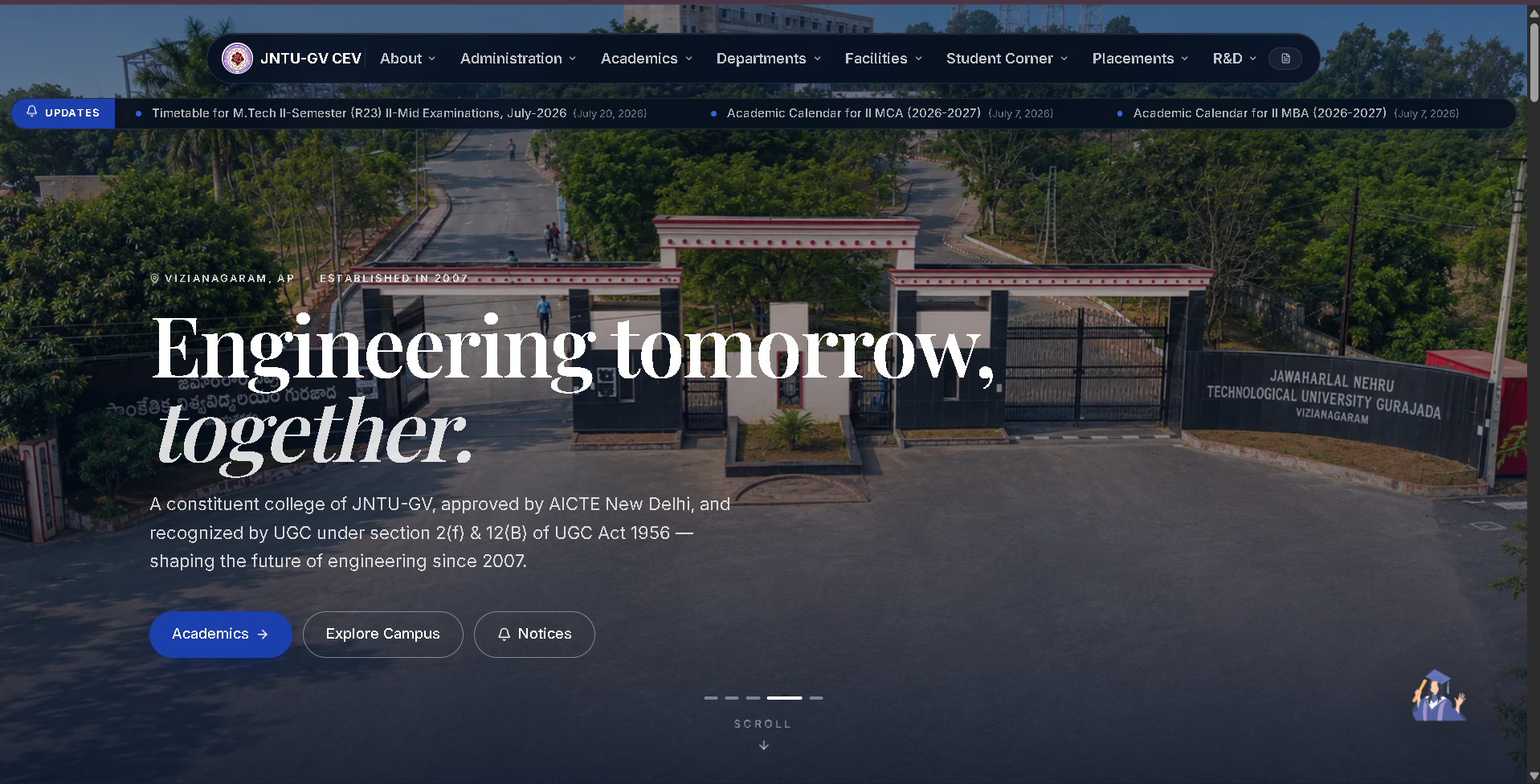
Official JNTU-GV CEV Homepage — Modern Editorial Typography, Dynamic Campus Highlights, Live Notifications & Fast Navigation
1. The Problem: The Bottlenecks of Traditional University Websites
Government and autonomous university portals historically suffer from severe architectural limitations:
Centralized Admin Bottlenecks: Any change — from a departmental seminar circular to updating a professor's email or lab photo — required submitting manual paper requests to a single overburdened webmaster, creating weeks of delay.
Exam-Time Traffic Spikes & Server Crashes: When semester timetables, hall tickets, or results were posted, thousands of concurrent student requests hit un-cached database queries, leading to server downtime.
Fragmented Department Silos: Each department (IT, CSE, ECE, EEE, Mechanical, Civil, Metallurgy, Basic Sciences) lacked the ability to showcase its own vision, research labs, faculty publications, and student societies dynamically.
Poor Mobile Accessibility & Student Discovery: Cluttered nested menus made finding syllabus regulations, academic calendars, and fee notices nearly impossible for students navigating on mobile devices.
2. Architecture & Multi-Tenant Role-Based CMS
We engineered an enterprise-grade, multi-tenant administrative architecture with granular Role-Based Access Control (RBAC) that distributes content publishing authority safely across the institution:
- ▪
Super Admin Command Center: Full institutional governance. Controls global homepage announcements, urgent ticker banners, leadership messages (Vice-Chancellor, Principal, Vice-Principal), NBA / NIRF accreditation data, campus infrastructure showcases, and system-wide audit logging.
- ▪
Dedicated HOD & Departmental Portals: Heads of Departments (HODs) and designated departmental coordinators receive dedicated login dashboards scoped strictly to their respective department. They can independently:
- Update department vision, mission, PEOs, and Program Specific Outcomes (PSOs).
- Manage faculty directories: designations, qualifications, research citations, emails, and office hours.
- Upload laboratory specifications, equipment counts, and licensed software inventories.
- Publish branch-specific notifications, student associations (e.g., ITYukta), and guest lectures.
- ▪
Examination Cell & Academic Section: Dedicated modules for publishing academic calendars, mid/end-semester timetables, grade cards, syllabus PDFs, and revaluation circulars with instant file indexing.
- ▪
Training & Placement Cell (T&P): Real-time placement statistics, company drive calendars, recruitment galleries, and student eligibility checklists.
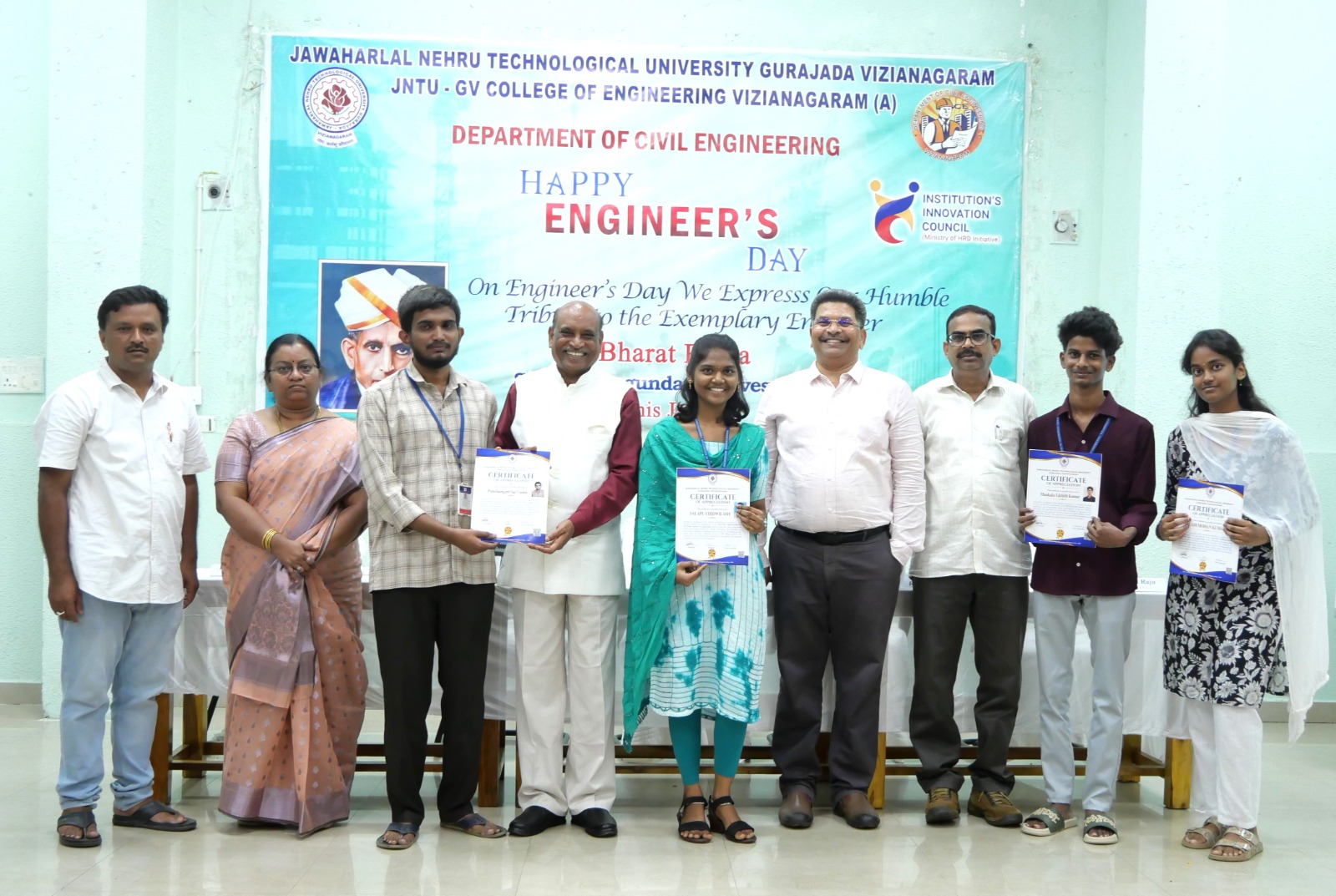
The Development Squad — IT Group & Faculty Mentors behind the JNTU-GV College Platform & Engineering Infrastructure
3. High-Performance Caching & Media Pipeline
To deliver instantaneous page loads even during peak traffic periods, the platform implements a layered caching and optimization strategy:
Stale-While-Revalidate (SWR) Query Caching: Frequently accessed public endpoints (circulars, departmental faculty rosters, and latest notices) are served instantly from memory cache while revalidating in the background, yielding <50ms response times.
Optimized Local Asset Pipeline: Images and documents uploaded by HODs and staff are routed through an automated compression pipeline (
/local-assets/uploads/), converting bulky uploads into responsive, modern WebP and optimized JPEG formats.Edge Static Generation for Stable Pages: Academic regulations, campus history, administrative charts, and facilities pages are pre-rendered at the edge for sub-second global delivery.
Zero-Downtime Database Architecture: High-efficiency queries constructed via Drizzle ORM over PostgreSQL with connection pooling prevent thread starvation during peak exam notice spikes.
4. Offline Database-Powered RAG AI Chatbot
To assist students navigating complex college regulations, we integrated an intelligent conversational assistant:
Grounded Knowledge Base: Indexes university regulations, syllabus documents, department faculty directories, lab locations, fee structures, and bus route information.
Natural Language Student Inquiries: Students can query "When are the R20 3-2 mid exams?", "Who is the HOD of IT department?", or "How do I apply for a duplicate grade card?" and receive instant, cited answers.
Strict Factual Guardrails: Operates strictly over verified institutional database records without hallucinating false dates or policy changes.
5. Technical Stack Summary
Client-side routing with TanStack Router, responsive Tailwind CSS styling, Cormorant Garamond & Inter typography, and Framer Motion micro-interactions.
Type-safe database schemas with PostgreSQL, parameterized SQL queries, secure JWT sessions, and RBAC middleware.
Local asset optimization pipeline under /local-assets/, cache headers, CDN routing, and sub-50ms static notice delivery.
Database-grounded conversational search answering student academic queries with verified citations.
6. Key Takeaways & Impact
"Leading the development of the official JNTU-GV CEV platform allowed us to transform how an entire engineering college communicates. By decentralizing content updates into secure HOD and departmental domains while backing the platform with high-efficiency caching and offline RAG search, we built an institutional engine that is fast, resilient, and effortless to maintain."